
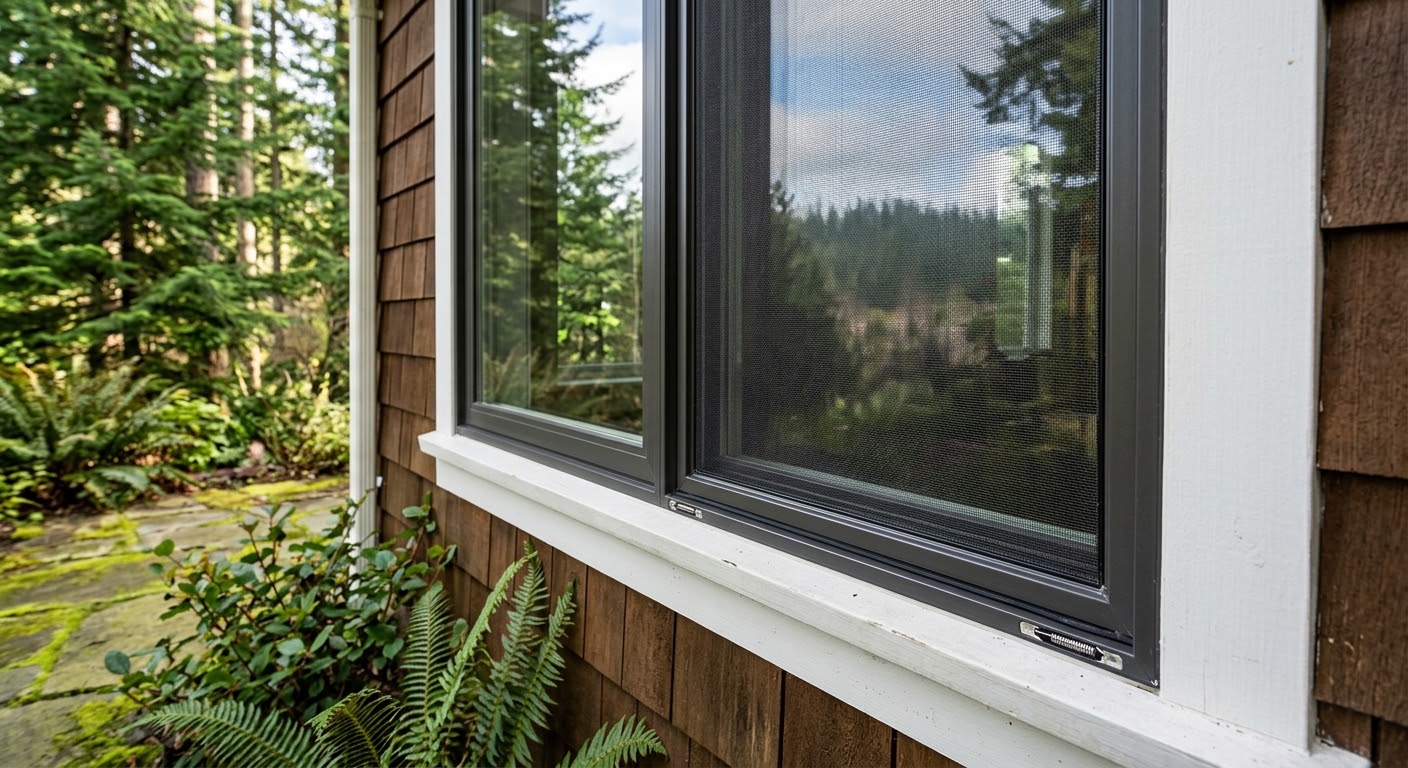
Window screens are easy to overlook until they stop doing their job. A small tear becomes a larger opening for insects, a sagging screen begins to pull away from the frame, or years of dirt, pollen, and mildew leave your view looking cloudy. In the Pacific Northwest, these problems often develop more quickly than they do in drier climates. Persistent moisture, seasonal UV exposure, and fluctuating temperatures all take a toll on window screens over time. Choosing the right screens isn’t just about replacing what’s worn out. It’s about selecting materials that can withstand the region’s climate and provide lasting performance.
This guide explains what to look for when choosing window screens for a Pacific Northwest home. We’ll cover the advantages of different frame materials, compare the most common types of screen mesh, and explain the signs that it’s time to repair or replace your existing screens.
Why PNW Climate Is Hard on Window Screens
A window screen that performs well in a dry, stable climate may not hold up nearly as long in the Pacific Northwest. Washington’s combination of moisture, seasonal sunlight, and changing temperatures creates challenging conditions for exterior materials. Understanding these factors can help you choose window screens that will last longer and require less maintenance.
- Prolonged Moisture and Humidity: Long stretches of damp weather during the fall and winter leave window screens exposed to moisture for months at a time. Over time, this creates favorable conditions for mildew and algae to develop on the mesh. Moisture can also contribute to corrosion on metal components, particularly if an aluminum frame has scratches or other damage that exposes the metal beneath the finish.
- Intense UV Exposure: Although the Pacific Northwest is known for its rainy weather, summer brings extended daylight and periods of strong sun. Over time, ultraviolet (UV) rays can weaken lower-quality screen mesh, causing it to become brittle, fade, and tear more easily.
- Temperature Swings: Window screens expand and contract as temperatures change throughout the year. Repeated cycles of cold, wet winters followed by warm, dry summers can gradually reduce mesh tension, leading to sagging, loose screens, or warping around the frame.
- Coastal Salt Air: Homes located near Puget Sound or other saltwater areas face an additional challenge. Salt carried in the air can accelerate corrosion on metal frames and shorten the lifespan of certain screen materials if they are not designed for coastal conditions.
Because of these conditions, choosing durable, climate-appropriate window screens is an investment in long-term performance. Higher-quality materials are better equipped to withstand the Pacific Northwest climate and typically require fewer repairs and replacements over time.
Frame Materials: What to Know
The frame provides the strength and structure that keeps a window screen secure over time. While the mesh does the filtering, the frame determines how well the screen resists bending, corrosion, and everyday wear. For most replacement window screens, aluminum remains the most common and reliable frame material.
Aluminum Frames
Aluminum is widely used because it's lightweight, durable, and resistant to warping. Not all aluminum frames are made the same, however. Lower-quality frames with thin finishes or exposed metal are more susceptible to oxidation, especially in the Pacific Northwest's damp climate. Over time, this can lead to discoloration, surface corrosion, and a shorter lifespan.
Look for screens with powder-coated or baked enamel finishes, which provide an added layer of protection against moisture and help the frame maintain its appearance for years.
Vinyl and Fiberglass Frames
Some window manufacturers offer vinyl and fiberglass screen frames designed specifically for their products. These materials won't corrode like metal and perform well in damp environments, making them a good option when available. However, they are generally manufacturer-specific and are less common than aluminum replacement screens.
Choosing the Right Frame
For most homeowners, a quality aluminum frame with a durable protective finish offers the best combination of strength, longevity, and low maintenance. Regardless of the material, choosing a well-built screen designed for your specific window is more important than selecting the least expensive option.
Choosing the Right Screen Mesh
For most homeowners, fiberglass mesh is the standard choice because it offers the best balance of durability, visibility, and affordability. However, depending on where your home is located and how you use your windows, another type of screen may be a better fit.

Fiberglass Mesh: The Best Choice for Most Homes
Fiberglass mesh is the most common material used for residential window screens. Made from woven fiberglass strands coated in vinyl, it resists moisture, won't rust, and provides excellent airflow and visibility. It's flexible enough to avoid permanent dents and is well suited to the Pacific Northwest's damp climate.
Unless you have a specific need, fiberglass is the material most homeowners should choose.

Aluminum Mesh: For Added Rigidity
Aluminum mesh offers a slightly more rigid feel than fiberglass and provides excellent visibility. It's often chosen for applications where a firmer screen is preferred. However, because aluminum can corrode if its protective finish is damaged, it generally performs best on covered patios, porches, or other locations that receive less direct exposure to rain and coastal moisture.

Pet Screen: Built for Active Households
If you have dogs or cats that regularly push against or scratch your screens, upgrading to pet screen is often worth the investment. Made from heavy-duty vinyl-coated polyester, it is significantly stronger than standard fiberglass and is much less likely to tear from claws or repeated use.
Many homeowners install pet screen only on lower-level windows or patio doors where pets are most likely to come into contact with the screen.

Solar Screen: For Sunny Windows
Rooms with large south- or west-facing windows can become noticeably warmer during the summer. Solar screen helps reduce heat gain and glare by blocking a significant portion of the sun's rays before they enter your home. It can also help protect flooring, furniture, and window coverings from UV damage.
The tradeoff is that solar screens reduce the amount of natural light entering the home and slightly darken the view.

No-See-Um Screen: For Homes Near Water
If your home is located near a lake, river, wetland, or heavily wooded area, standard window screens may not keep out the smallest insects. No-see-um mesh uses a tighter weave that blocks gnats, midges, and other tiny pests while still allowing fresh air to circulate.
Although the finer mesh slightly reduces airflow compared to standard fiberglass, many homeowners find the added insect protection well worth it.

Which Mesh Is Right for You?
For most homes, fiberglass mesh remains the best all-around choice. If you have pets, receive intense afternoon sun, or live near water where insects are more of a concern, upgrading selected windows with a specialty mesh can provide additional comfort and durability without replacing every screen in your home.
Signs Your Window Screens Need to Be Replaced
Damaged screens are more than just a cosmetic issue; they fail at their primary job of keeping pests out and can make an otherwise well-maintained home look neglected. Here are the clear visual cues that it’s time for a window screen replacement.
- Obvious Holes and Tears: Even a small hole is an open invitation for insects.
- Sagging or Loose Mesh: When a screen loses its tension, it can billow in the wind and easily pop out of the frame.
- Bent or Warped Frames: A frame that is no longer square will not sit properly in the window channel, creating gaps for bugs to enter.
- Persistent Mildew or Stains: Black or green spots that cannot be removed with cleaning indicate that mildew has embedded itself into the mesh material.
- Spline Pulling Away: The rubber spline is what holds the mesh tightly in the frame channel. If it's cracked, shrinking, or pulling out, the screen will soon fail.
- Difficulty Staying in Place: If screens constantly fall out of the window tracks, the frames are likely bent or the tension springs are broken.
What to Expect from a Professional Screen Replacement Service
ensuring the screens stay securely in place over time. Because every window is slightly different, replacement screens should be custom measured rather than treated as a one-size-fits-all product.
A professional screen replacement service typically begins with measuring each window to ensure an accurate fit. From there, the contractor can recommend the appropriate frame material and mesh type based on the location of the window, your home’s environment, and any specific needs, such as pet-resistant or solar screen mesh.
Once the screens are fabricated, they are installed and checked to ensure they fit securely within the window frame, operate smoothly, and provide proper coverage without gaps or excessive movement. A well-built, properly installed screen should provide years of reliable performance with minimal maintenance.
Frequently Asked Questions About PNW Window Screens
How long do window screens last in the Pacific Northwest?
The lifespan of a window screen depends on the materials used and how much exposure it receives. Standard fiberglass screens typically last 5 to 10 years, although screens in protected locations may last longer. Windows that receive direct afternoon sun or are exposed to constant moisture may require replacement sooner. Heavier-duty options, such as pet screen mesh, often have a longer lifespan.
Can window screens be repaired, or do they need to be replaced?
It depends on the condition of the screen. If the frame is still straight and undamaged, it’s often possible to replace only the mesh through a process known as re-screening. If the frame is bent, corroded, or no longer fits properly, replacing the entire screen is usually the better long-term solution.
What are the best pet screen windows for homes with dogs?
For homes with dogs, look for pet-resistant screening made from reinforced, vinyl-coated polyester rather than standard fiberglass mesh. It holds up better to repeated scratching, leaning and everyday contact, which can mean fewer screen repairs or replacements over time. The tradeoff is that the heavier mesh can slightly reduce airflow and outward visibility compared with a standard screen, so it makes the most sense on the windows your dog actually interacts with rather than throughout the entire home.
Get a Professional Assessment for Your Screens
If your window screens are sagging, torn, or simply not fitting right anymore, it’s a quick and easy fix when you have the right team. Breeze Free measures, recommends, and installs custom window screens across Seattle and King and Snohomish Counties with the same care and precision we put into every window and door project. Let us help you enjoy the fresh air again, worry-free.
Contact us today for a straightforward assessment and a no-pressure quote.